


Paperless Factory:
Enhancing Logistics Efficiency through Real-Time Digital Operations
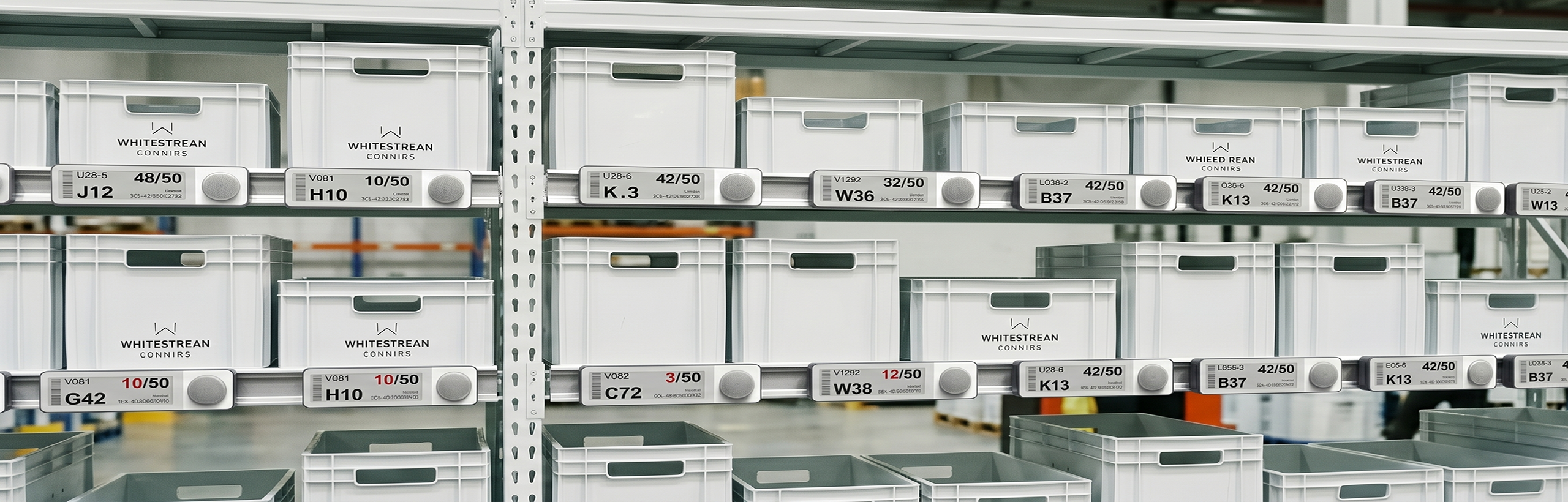
A Paperless Factory transforms logistics operations through real-time visibility and digital workflows.
- Industry
- Manufacturing
- Product
- ESL & IoT
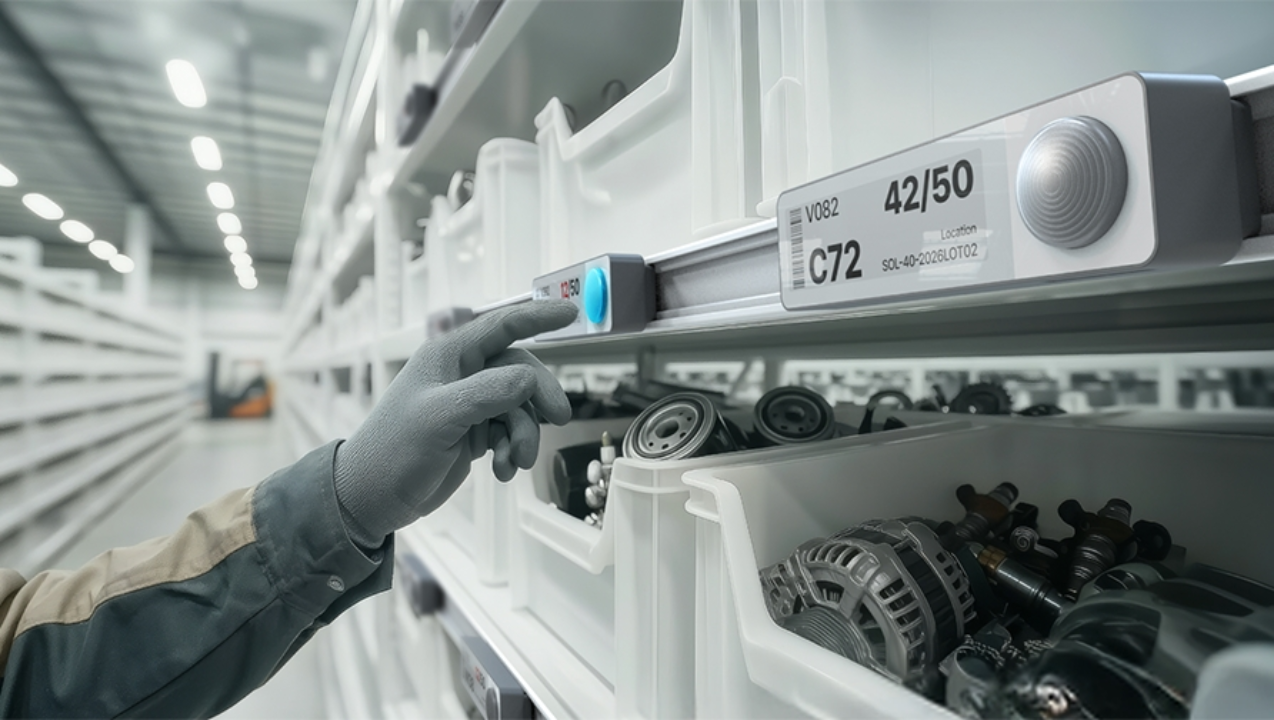

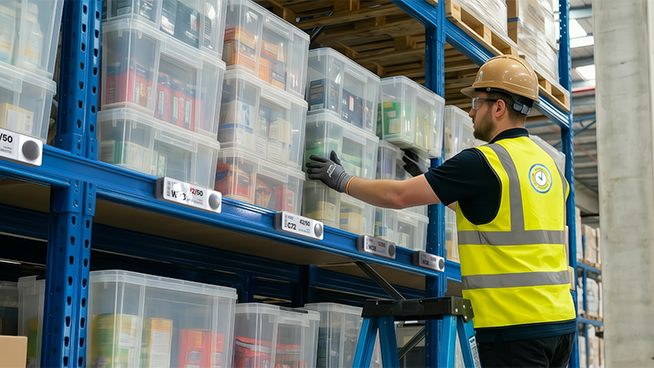
A Paperless Factory is not merely an environmental initiative to eliminate paper. It is an operational innovation that prevents update delays and on-site omissions through logistics digitalization.
Paper work orders and printouts, still widely used in many warehouses, often struggle to reflect real-time changes promptly. This can lead to lost documents, manual entry errors, and a higher risk of rework. However, SOLUM's ESL infrastructure digitally integrates the display, confirmation, and feedback phases on-site through a total IoT solution. Data from upper-level systems, such as WMS, is reflected on-site and work results are fed back in real time.
Through this paperless solution, SOLUM eliminates picking delays caused by manual visual checks and secures clear operational visibility.
Blocking the Cause of 62% of Warehouse Errors : SOLUM ESL Maximizing Process Efficiency
Paper and sticker label operations often decrease efficiency in logistics environments. The manual effort of replacing paper whenever logistics information changes leads to accumulated operational losses and environmental issues. More importantly, delayed updates or omitted work orders trigger unnecessary repetitive tasks, such as re-checking and reprinting, which degrades process efficiency.
SOLUM's ESL is more than just a display : it transforms manual operations into a digital system through its unique high-speed wireless communication technology solution, covering the entire cycle of instruction, execution, confirmation, and system update.
- Newton Series (Digital Work Instruction Infrastructure) : Replaces paper work orders and printed barcodes by displaying crucial on-site information, such as SKU, picking quantity, and lot number, in real time. It reduces repetitive tasks like printing and distribution, improving process continuity.
- Industrial Tag (Wireless DAS Alternative and Task Confirmation) : Implements the wired DAS (Digital Assorting System) method in a wireless tag format. When a worker presses the dedicated button to confirm picking, the event is efficiently reflected in the system. Its rugged durability, tailored for factory and logistics environments, supports stable operation even in extreme conditions.
According to Logistics Management, "manual data entry and management processes account for approximately 62% of warehouse errors". Displaying accurate, real-time material information directly prevents human errors and ensures reliable data. A 2026 PatSnap report supports this, noting that replacing manual methods with a "real-time data integration infrastructure can reduce maintenance costs by 15-25%". This data-driven approach forms the foundation of a smart factory, maximizing overall logistics efficiency.
99% Picking Accuracy Innovation :
Supply Chain Optimization Challenging 0% Human Error
Traditional supply chain management relies heavily on workers' vision and memory. This manual search method increases fatigue, causes inefficient movement, and directly leads to higher error rates that put the entire operation at risk. However, digitizing material data and linking it to the 7-color LED indicators on the labels drastically reduces the chance of picking errors.
Industry data confirms this impact. A 2025 report by Modern Materials Handling highlighted that Pick-to-Light systems "improve inventory accuracy to over 99%". Similarly, 2023 research from MDPI verified that smart LED indicator systems minimize human error to near zero.
Utilizing blinking LEDs to precisely guide workers to target materials is a definitive solution that drives true supply chain optimization.
Paperless Factory Transformation : DAU D&D’s Success with SOLUM
What tangible results do warehouse managers experience after implementing SOLUM's solutions? DAU D&D executed a Paperless Factory project with SOLUM to achieve precise logistics operations and efficient supply chain management. The primary challenge was managing the complex picking process caused by an increasing volume of high-mix, low-volume cargo. In a facility with tens of thousands of parts, it previously took significant time for workers to memorize locations and build speed. After system implementation, this transitioned to a structured process where the LED on the corresponding material's label blinks to provide guidance according to the dispatch order.
- 75% Reduction in Picking Lead Time (40 min -> 10 min) : Eliminating the need to cross-check items against paper lists dramatically accelerated the workflow.
- Labor Efficiency (2-person team -> 1-person dedicated) : With the intuitive LED guides and instant button confirmation, tasks that previously required two people — a checker and an executor — are now handled efficiently by a single worker, cutting labor costs by 50%.
- Overwhelming ROI (Approx. 5 months) : Through labor savings and time efficiency, the initial deployment cost was fully recovered in just five months.
- Enhanced Operational Quality : Real-time data confirmation minimizes human errors such as mis-shipments, significantly lowering reverse logistics costs associated with redeliveries and rework.
Achieving ROI in Just 5 Months :
Cost Reduction through Task Confirmation and Visibility
- Real-time updates instead of manual replacement
Paper and sticker-based information updates can cause delays and omissions. With e-paper displays, process and inventory data are updated in real time on-site. - Data-driven decisions instead of intuition-based judgment
Operational decisions no longer rely solely on experience. Storage, packaging, and order processes can be optimized through data-driven analysis.
- End-to-end visibility instead of fragmented checks
Manual section-by-section checks limit operational visibility. Real-time dashboards enable integrated, end-to-end monitoring across the workflow.
- Higher efficiency with measurable ROI
Repetitive picking tasks traditionally require significant time and manpower. In the DAU D&D case, work time was reduced by 75%, labor cost by 50%, and ROI was achieved in 5 months.
SOLUM ESL : Beyond Simple Logistics Labels, Completing the Smart Factory through a Total IoT Platform
The transition to a Paperless Factory is no longer an option; it is a vital survival strategy in a rapidly changing supply chain environment. In warehouses characterized by vast materials and complex workflows, precise supply chain management directly correlates with corporate competitiveness. SOLUM's system operates reliably even in harsh industrial environments, providing an integrated control solution that seamlessly connects network data with the physical floor, thereby adding efficiency to supply chain management.
FAQ
Q. Is the LED picking feature the core of this solution?
A. The 7-color LEDs and buttons are intuitive tools used to guide and confirm on-site tasks. The core of this solution is digitizing paper-based manual processes — instruction, verification, and confirmation — to reduce delays and omissions, ensuring work results are reliably reflected in the system.
Q. What data can be checked in real time?
A. On-site display devices can show work orders (such as quantity and lot number) and progress status. Furthermore, they can be configured to update upper-level systems like WMS more quickly based on work confirmation events. (The scope of integration may vary depending on the customer's system configuration.)
Q. Considering the harsh warehouse environment with dust and forklifts, won't there be malfunction or battery discharge issues when installing tens of thousands of labels?
A. SOLUM’s solutions feature water and dust-resistant designs specialized for industrial environments and use impact-resistant polycarbonate for exceptional durability. By applying ultra-low-power wireless technology and E-ink displays optimized for large-scale facilities, the system maintains stable performance for up to 10 years without the need for frequent battery replacements.
Reference
- Logistics Management (2026) — Statistics on 62% warehouse error rate due to manual data entry.
- PatSnap (2026) — Analysis report on 15-25% maintenance cost reduction through smart factory infrastructure.
- Modern Materials Handling (2025) — Analysis report on over 99% picking accuracy improvement with Pick-to-Light system.
- MDPI (2023) — Research paper verifying human error control through LED indicators in smart logistics.
