SOLUM CEO Sungho Jun: Beyond ESL, Building the Future of Physical Retail
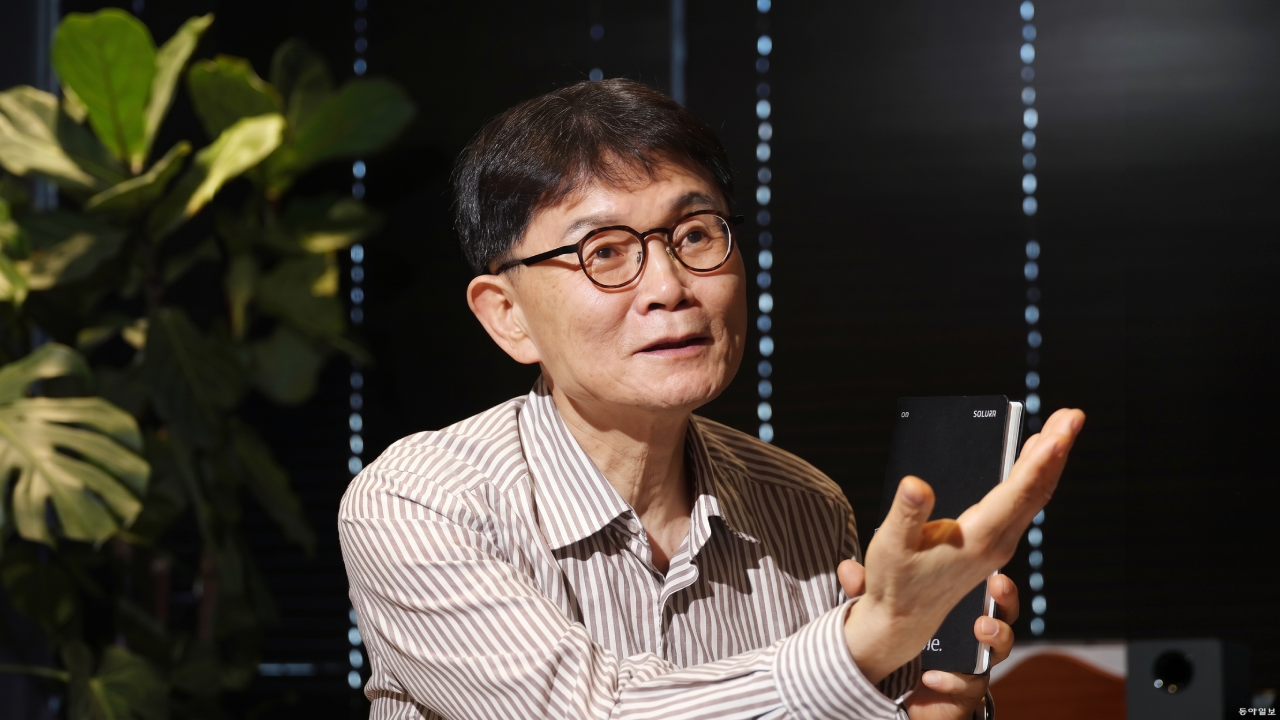
In a recent interview with The Dong-A Ilbo, SOLUM CEO Sungho Jun shared his perspective on the evolution of Electronic Shelf Labels (ESL), the enduring value of physical retail, and the long-term investment required to turn technology into meaningful business growth.
💡 AI Summary
- SOLUM CEO Sungho Jun views ESL as a foundation for broader retail solutions, not simply a hardware product. His strategy centers on long-term technology investment that creates practical value for physical retailers.
For SOLUM, ESL has never been simply about replacing paper price tags with digital displays. From the beginning, Jun saw the technology as an opportunity to address broader challenges facing physical retailers and improve the way stores operate.
“ESL is not simply a hardware business. It is a retail solution.”
That perspective has shaped SOLUM’s long-term approach to the business. Despite entering the ESL market as a latecomer and operating the business at a loss for more than six years, the company continued to invest in the technology because of its potential to play a broader role in the future of retail.
Seeing Potential Beyond the Price Tag
The fundamental value of ESL begins with a simple operational challenge.
In physical stores, price changes traditionally require employees to replace paper labels manually. ESL enables retailers to update product and pricing information digitally and in real time, helping reduce repetitive tasks while allowing stores to respond more quickly to changing promotions and operating needs.
For Jun, however, the opportunity extends beyond operational automation.
He believes physical retail will continue to play an important role even as online commerce expands, because stores offer something digital channels cannot fully replicate: the ability for customers to see, touch, and experience products directly.
“No matter how much online retail develops, it cannot completely replace the experience of seeing, touching, and experiencing products in person. Physical stores will continue to have an important role.”
This belief was one of the reasons SOLUM continued investing in ESL even when the business was not yet profitable.
SOLUM entered the market as a latecomer and endured more than six years of losses. But Jun believed ESL could eventually serve a much broader purpose within retail environments.
“We invested because we had a vision that ESL could be used in many different ways in the future retail market.”
From ESL Hardware to Retail Solutions
That long-term view is also reflected in how SOLUM sees the role of ESL today.
Real-time pricing remains one of its fundamental applications, but the broader opportunity lies in helping retailers improve store operations and make physical retail environments more efficient.
As stores become increasingly connected and data-driven, technologies within the store can support better visibility into operations, reduce repetitive manual work, and help retailers respond more effectively to changing customer and business needs.
For SOLUM, this represents an evolution from providing individual hardware products toward addressing the broader operational challenges retailers face.
The focus is not simply on digitizing the price tag. It is on creating practical value for retailers through technology and helping physical stores operate more efficiently.
Investing for Long-Term Growth
SOLUM’s experience in ESL also reflects Jun’s broader approach to building new businesses.
Developing a new growth engine requires investment before results become visible, as well as the patience to continue when the market takes longer to develop than expected.
Jun described SOLUM’s journey through a simple analogy:
“We have been planting seeds, watering them, and removing weeds. Now, we are entering the stage where those efforts need to bear fruit.”
For SOLUM, the years spent developing ESL demonstrate the importance of maintaining a long-term view while continuing to turn technology into tangible value for customers.
The company’s ambition is to build on that foundation by moving beyond individual products and continuing to develop solutions that address the evolving needs of physical retail.
For Jun, the direction remains clear: technology must ultimately create practical value, and sustainable growth comes from having the conviction to invest in that value over time.
Source: The Dong-A Ilbo (https://www.donga.com/news/Economy/article/all/20261001/134769158/1)
There is no prev News